
Level up your residential program reporting
The most efficient way to measure residential curbside and drop-off program performance in your region.

Centralize program information
Compare diversion performance
Identify the biggest challenges
Measure pounds per household
%20rotate(-.75)'/%3e%3crect%20class='cls-11'%20x='97.43'%20y='28.27'%20width='2'%20height='7.83'%20transform='translate(-.41%201.28)%20rotate(-.74)'/%3e%3c/g%3e%3cpolyline%20class='cls-2'%20points='88.22%2042.29%2098.71%2052.79%20110.14%2041.59'/%3e%3cpolyline%20class='cls-2'%20points='88.22%2042.29%2098.71%2052.79%20110.14%2041.59'/%3e%3cg%3e%3cline%20class='cls-7'%20x1='10.01'%20y1='100.74'%20x2='21.76'%20y2='100.59'/%3e%3cline%20class='cls-1'%20x1='25.68'%20y1='100.54'%20x2='33.18'%20y2='100.44'/%3e%3c/g%3e%3cg%3e%3crect%20class='cls-9'%20x='10.01'%20y='99.69'%20width='7.83'%20height='2'%20transform='translate(-1.33%20.19)%20rotate(-.76)'/%3e%3crect%20class='cls-9'%20x='25.68'%20y='99.49'%20width='7.5'%20height='2'%20transform='translate(-1.32%20.4)%20rotate(-.76)'/%3e%3c/g%3e%3cpolyline%20class='cls-1'%20points='23.3%20110.9%2034.01%20100.64%2023.06%2088.97'/%3e%3cpolyline%20class='cls-1'%20points='23.3%20110.9%2034.01%20100.64%2023.06%2088.97'/%3e%3cg%3e%3cline%20class='cls-4'%20x1='165.68'%20y1='100.94'%20x2='173.17'%20y2='100.84'/%3e%3cline%20class='cls-6'%20x1='181.01'%20y1='100.74'%20x2='192.76'%20y2='100.59'/%3e%3c/g%3e%3cg%3e%3crect%20class='cls-10'%20x='165.68'%20y='99.89'%20width='7.5'%20height='2'%20transform='translate(-1.27%202.16)%20rotate(-.73)'/%3e%3crect%20class='cls-10'%20x='181.01'%20y='99.69'%20width='7.83'%20height='2'%20transform='translate(-1.26%202.36)%20rotate(-.73)'/%3e%3c/g%3e%3cpolyline%20class='cls-4'%20points='175.77%20110.9%20165.06%20100.64%20176.01%2088.97'/%3e%3cpolyline%20class='cls-4'%20points='175.77%20110.9%20165.06%20100.64%20176.01%2088.97'/%3e%3cpath%20class='cls-5'%20d='M164,156.46H35.25c-3.16,0-5.04-3.52-3.29-6.15l12.68-13.62h109.97l12.68,13.62c1.75,2.63-.13,6.15-3.29,6.15Z'/%3e%3cpath%20class='cls-5'%20d='M164,156.46H35.25c-3.16,0-5.04-3.52-3.29-6.15l12.68-13.62h109.97l12.68,13.62c1.75,2.63-.13,6.15-3.29,6.15Z'/%3e%3cpath%20class='cls-8'%20d='M54.4,70.69h89.38c1.66,0,3,1.34,3,3v52.2H51.4v-52.2c0-1.66,1.34-3,3-3Z'/%3e%3cpath%20class='cls-8'%20d='M54.4,70.69h89.38c1.66,0,3,1.34,3,3v52.2H51.4v-52.2c0-1.66,1.34-3,3-3Z'/%3e%3c/svg%3e)
%20rotate(-90)'/%3e%3crect%20class='cls-3'%20x='103.5'%20y='74.5'%20width='15'%20height='97'%20transform='translate(-12%20234)%20rotate(-90)'/%3e%3crect%20class='cls-2'%20x='88.5'%20y='49.5'%20width='15'%20height='67'%20transform='translate(13%20179)%20rotate(-90)'/%3e%3crect%20class='cls-3'%20x='118.5'%20y='-.5'%20width='15'%20height='127'%20transform='translate(63%20189)%20rotate(-90)'/%3e%3cpolyline%20class='cls-1'%20points='54.5%2063%2047%2063%2047%2083%2054.5%2083'/%3e%3cline%20class='cls-1'%20x1='38.49'%20y1='73'%20x2='47'%20y2='73'/%3e%3cpolyline%20class='cls-1'%20points='54.5%20123%2047%20123%2047%20143%2054.5%20143'/%3e%3cline%20class='cls-1'%20x1='38.49'%20y1='133'%20x2='47'%20y2='133'/%3e%3ccircle%20class='cls-1'%20cx='22.13'%20cy='132.89'%20r='11.7'/%3e%3cpath%20class='cls-4'%20d='M23.6,74.49h-3.79l-.59,1.54h-1.54l3.14-8h1.75l3.14,8h-1.54l-.59-1.54ZM20.21,73.25h3l-1.5-4.04-1.5,4.04Z'/%3e%3cpath%20class='cls-4'%20d='M18.68,129.03h3.93c1.46,0,2.28.91,2.28,2.04,0,1.01-.65,1.68-1.39,1.83.85.13,1.55.98,1.55,1.97,0,1.23-.83,2.16-2.33,2.16h-4.04v-8ZM22.32,132.34c.72,0,1.13-.43,1.13-1.03s-.41-1.04-1.13-1.04h-2.24v2.07h2.24ZM22.38,135.79c.77,0,1.22-.42,1.22-1.12,0-.6-.42-1.1-1.22-1.1h-2.3v2.22h2.3Z'/%3e%3c/svg%3e)


Consolidate program information
Understand how communities collect trash
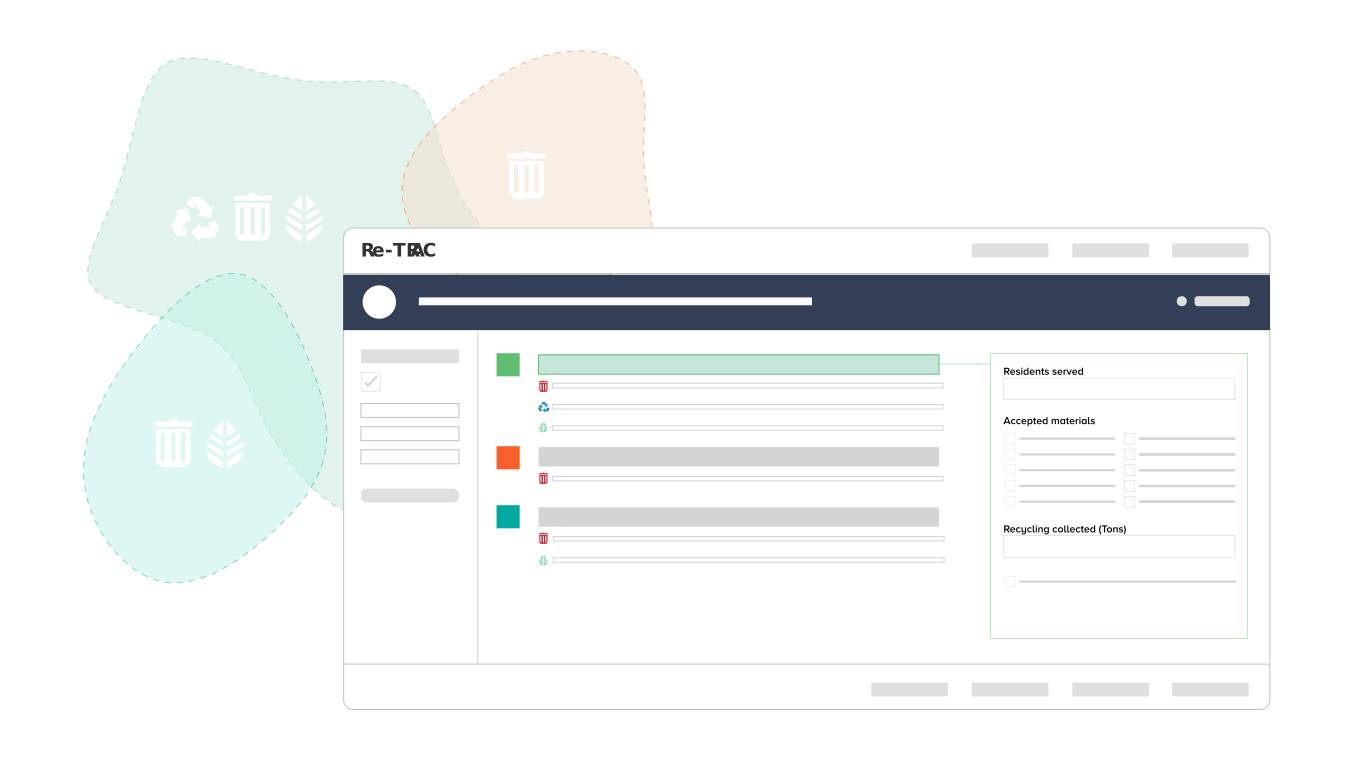
Identify which municipalities, counties, and districts provide residential curbside & drop-off municipal solid waste (MSW) collection programs, who provides collection application, and how many tons of MSW are collected each year.
Capture recycling program characteristics
Collect information about residential curbside & drop-off recycling programs, how many residents are served, which materials are accepted, and how many tons of recycling are collected each year.
Keep track of organics collection
Discover which communities have active yard & food waste collection programs, how & when these materials are collected, and how many tons are collected each year.
Evaluate local government program performance
Measure diversion rates
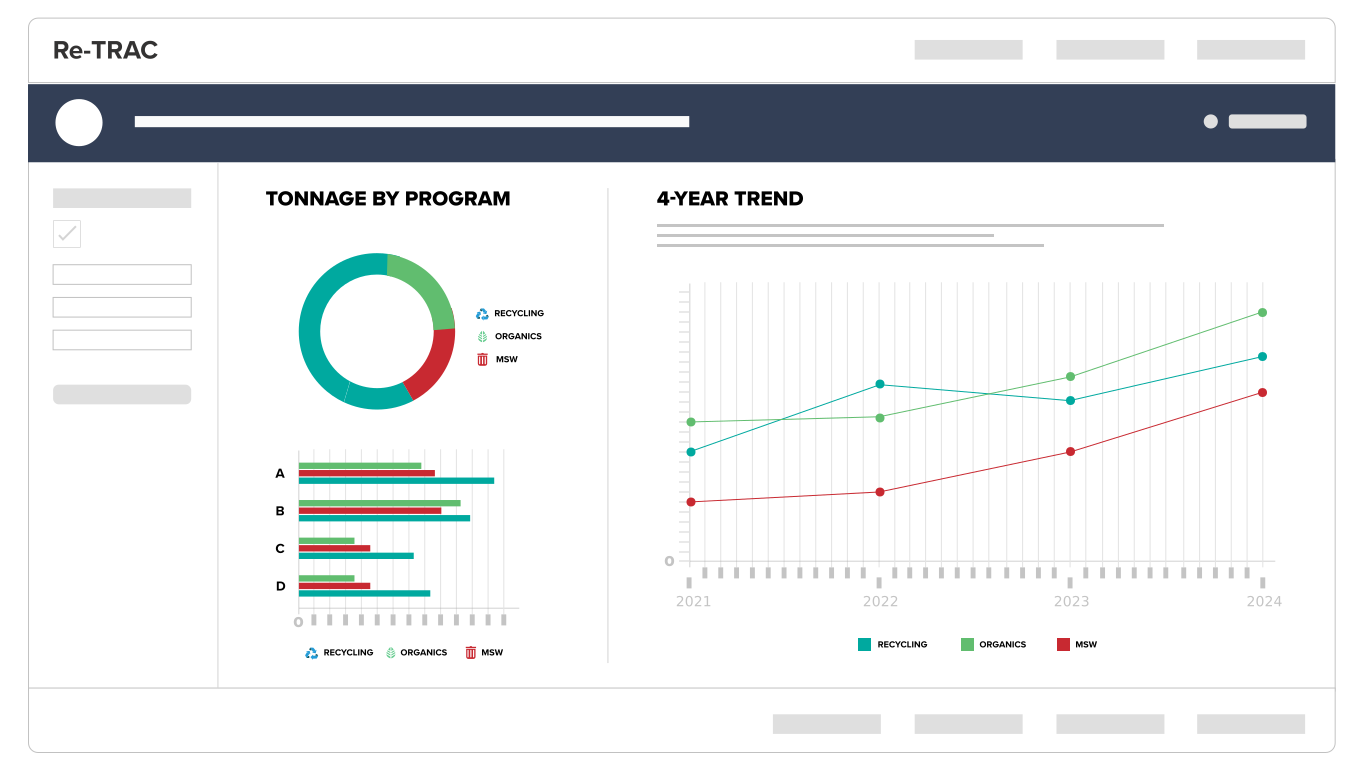
Calculate the average diversion rate for your jurisdiction and assess how each community's diversion performance contributes to the average.
Annual tonnage by program
Measure the total tons of recycling, MSW, yard waste, and food waste captured by all residential programs in your jurisdiction.
Apples-to-apples comparison
Normalize results by comparing the pounds of MSW, recycling, and organics generated by households served by curbside collection programs.
Trend performance over time
Monitor your jurisdiction's annual performance metrics to analyze trends and identify opportunities to make program adjustments.
EXCEPTIONAL CUSTOMER SERVICE
Customer Success Manager
A Customer Success Manager (CSM) will be assigned to you to guide you through every phase of your data collection program.
Data Experts
Our team excels at converting data collection & measurement needs into customized Re-TRAC programs that capture reliable, high-quality data.
Service you can trust
Our experienced Customer Success team consistently earns an average of 4.5 out of 5 stars for customer satisfaction.
;%20}%20%3c/style%3e%3clinearGradient%20id='linear-gradient'%20x1='83.08'%20y1='19.13'%20x2='18.94'%20y2='64.03'%20gradientUnits='userSpaceOnUse'%3e%3cstop%20offset='0'%20stop-color='%23ff0f7b'/%3e%3cstop%20offset='1'%20stop-color='%23f89b29'/%3e%3c/linearGradient%3e%3c/defs%3e%3cpath%20class='cls-1'%20d='M91.01,30.45v23.8s-5.08.99-6.13,1.13-4.31,1.19-6.69-1.09c-3.67-3.58-16.68-16.54-16.68-16.54-1.68-1.36-4.05-1.48-5.85-.29-3.3,1.74-8.22,4.3-10.26,5.29-2.25,1.32-5.14.56-6.46-1.69-.36-.61-.57-1.3-.63-2,.09-1.85,1.23-3.48,2.94-4.2,4.66-2.8,14.51-8.4,18.61-10.53,2.49-1.4,4.28-1.4,7.72,1.4,4.21,3.63,8.04,6.8,8.04,6.8.92.65,2.07.87,3.16.6,4.72-.98,12.24-2.69,12.24-2.69ZM39.2,70.66c.93-2.13-.05-4.6-2.17-5.53-.88-.38-1.87-.45-2.8-.2.47-1.46.13-3.06-.9-4.2-1.12-1.07-2.71-1.46-4.2-1.05.47-1.46.12-3.06-.91-4.2-1.89-1.74-4.82-1.66-6.61.18-1.93,1.85-3.18,5.21-1.4,7.2s3.7.77,5.21.42c-.42,1.5-1.68,2.9-.13,4.86,1.55,1.96,3.7.77,5.21.42-.42,1.5-1.62,3.02-.14,4.84s3.98.85,5.6.35c-.63,1.61-1.97,3.35-.25,5.31s5.71,1.05,7.66-.81c1.92-1.69,2.11-4.63.42-6.55-1.21-1.19-2.99-1.59-4.59-1.04ZM74.69,58.31l-15.02-14.95c-1.42-1.33-3.48-1.7-5.28-.95-2.1.92-4.8,2.18-6.85,3.14-1.41.84-2.98,1.36-4.61,1.54-4.32.04-7.86-3.43-7.9-7.75-.03-2.73,1.38-5.28,3.7-6.73,3.26-2.23,10.39-6.05,10.39-6.05-1.81-1.91-4.37-2.93-7-2.8-4.79,0-14.81,6.58-14.81,6.58-2.15,1.12-4.7,1.19-6.9.18l-7.81-2.72v27.16s2.23.64,4.2,1.4c.45-1.31,1.2-2.49,2.18-3.46,3.31-3.17,8.52-3.21,11.87-.08.9.93,1.54,2.07,1.88,3.32,1.21.38,2.32,1.05,3.21,1.96.9.95,1.54,2.11,1.86,3.37,2.61.81,4.58,2.94,5.19,5.6,1.27.36,2.43,1.05,3.35,2,1.74,1.82,2.51,4.36,2.07,6.85h0s1.12,1.26,1.81,1.95c1.35,1.35,3.53,1.35,4.87,0s1.35-3.53,0-4.87c0,0,2.8,3.47,5.99,1.4,2.8-1.96,2.37-4.28,1.04-5.6,1.59,1.89,4.4,2.13,6.29.55.14-.11.26-.24.39-.37,1.25-1.26,1.32-3.26.18-4.62,0,0,1.86,2.53,5.6.17,2.65-2.24,1.4-4.8,0-6.15l.11-.07Z'/%3e%3c/svg%3e)

;%20}%20.cls-2%20{%20fill:%20url(%23linear-gradient-4);%20}%20.cls-3%20{%20fill:%20url(%23linear-gradient-3);%20}%20.cls-4%20{%20fill:%20url(%23linear-gradient);%20}%20%3c/style%3e%3clinearGradient%20id='linear-gradient'%20x1='50.16'%20y1='71.72'%20x2='27.28'%20y2='87.74'%20gradientUnits='userSpaceOnUse'%3e%3cstop%20offset='0'%20stop-color='%23ff0f7b'/%3e%3cstop%20offset='1'%20stop-color='%23f89b29'/%3e%3c/linearGradient%3e%3clinearGradient%20id='linear-gradient-2'%20x1='70.33'%20y1='73.76'%20x2='53.34'%20y2='85.66'%20xlink:href='%23linear-gradient'/%3e%3clinearGradient%20id='linear-gradient-3'%20x1='63.39'%20y1='32.01'%20x2='36.61'%20y2='50.76'%20xlink:href='%23linear-gradient'/%3e%3clinearGradient%20id='linear-gradient-4'%20x1='73.77'%20y1='24.74'%20x2='26.23'%20y2='58.03'%20xlink:href='%23linear-gradient'/%3e%3c/defs%3e%3cpath%20class='cls-4'%20d='M49.08,72.8c-1.84-.34-3.27-1.68-4.44-2.78-.62-.58-1.47-1.38-1.91-1.49-.06-.02-.16-.03-.35-.03-.58,0-1.4.19-2.19.37-1.04.24-2.12.48-3.21.48-1.04,0-1.95-.23-2.73-.68-.25-.14-.47-.3-.68-.47l-7.95,17.17,9.88-.3,6.16,7.73,8.34-18.02.92-1.98c-.3.06-.6.09-.92.09-.32,0-.62-.03-.92-.09Z'/%3e%3cpath%20class='cls-1'%20d='M65.76,68.67c-.78.45-1.7.68-2.73.68h0c-1.1,0-2.17-.25-3.21-.48-.79-.18-1.61-.37-2.19-.37-.18,0-.29.02-.35.03-.44.12-1.29.91-1.91,1.49-.29.27-.6.56-.92.84l-3.13,6.75,7.03,15.18,6.17-7.73,9.88.3-7.95-17.17c-.21.17-.43.33-.68.47Z'/%3e%3cpath%20class='cls-3'%20d='M50,25.04c-9.03,0-16.35,7.32-16.35,16.35s7.32,16.35,16.35,16.35,16.35-7.32,16.35-16.35-7.32-16.35-16.35-16.35Z'/%3e%3cpath%20class='cls-2'%20d='M74.84,48.05c.61-2.26,4.27-4.2,4.27-6.66s-3.67-4.39-4.27-6.66c-.63-2.34,1.56-5.85.38-7.9-1.2-2.08-5.35-1.93-7.04-3.62-1.69-1.69-1.54-5.83-3.62-7.04-2.05-1.18-5.56,1-7.9.38-2.26-.6-4.2-4.27-6.66-4.27s-4.39,3.67-6.66,4.27c-2.34.63-5.85-1.56-7.9-.38-2.08,1.21-1.93,5.35-3.62,7.04-1.69,1.69-5.84,1.54-7.04,3.62-1.19,2.05,1,5.56.38,7.9-.61,2.26-4.28,4.2-4.28,6.66s3.67,4.39,4.28,6.66c.63,2.34-1.57,5.85-.38,7.9,1.2,2.08,5.35,1.93,7.04,3.62.78.78,1.16,2.07,1.56,3.36.33,1.1.67,2.19,1.26,2.96.22.3.49.55.8.73,2.05,1.19,5.56-1,7.9-.38,1.45.39,2.76,2.02,4.16,3.15.79.64,1.61,1.12,2.5,1.12s1.71-.48,2.5-1.12c1.37-1.11,2.66-2.7,4.07-3.13.03-.01.06-.02.09-.03,2.34-.63,5.85,1.56,7.9.38.31-.18.58-.43.8-.73,1.27-1.67,1.38-4.88,2.82-6.31,1.69-1.69,5.83-1.54,7.04-3.62,1.19-2.05-1-5.56-.38-7.91ZM50,60.8c-.38,0-.75-.01-1.12-.03-4.67-.27-8.9-2.18-12.1-5.17-3.81-3.55-6.19-8.59-6.19-14.2,0-10.72,8.69-19.41,19.41-19.41s19.41,8.69,19.41,19.41-8.69,19.41-19.41,19.41Z'/%3e%3c/svg%3e)

"The GDMP is a great solution for state agencies that want to get started quickly with local government reporting but don't have the time or budget to design a brand new program."
State Recycling Coordinator
Mississippi Department of Environmental Quality (MDEQ)